By Sarah Newcomb, Director of Financial Psychology, Morningstar US
In the world of finance, we often think about decades-long investment time horizons. In doing so, many of us have unconsciously trained ourselves to think long-term because that’s the nature of the job. This long-term planning mindset is something we can take for granted, but most people don’t think this way, and that matters … a lot.
What Is Mental Time Horizon?
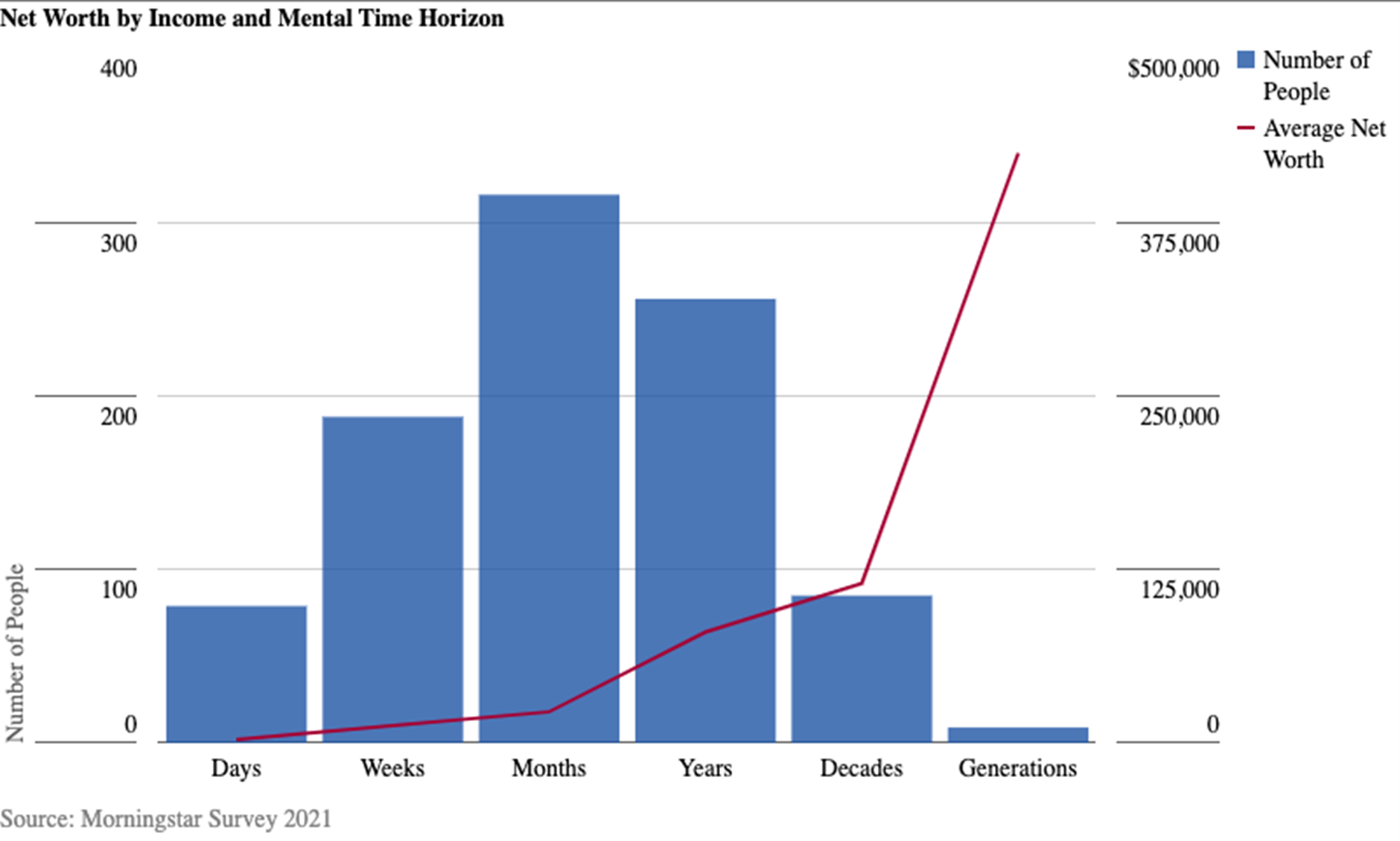
In a recent study for Morningstar, I asked a nationally representative sample of more than 900 U.S. households the following question: “When you think about your finances, how far into the future do you tend to think and plan?”
I call this a person’s mental time horizon. It’s the point at which your mental picture of the future becomes fuzzy or unformed. Some can see only a few days ahead. Others look to the next generation. Innovators and entrepreneurs often think in generations or even millenniums. The typical man on the street tends to think in the short term, however, as the results of our survey show.
In our sample, most people regardless of age, income, or education reported thinking several years ahead at most. This may explain why so many people struggle to save, invest, and adequately plan for the future. If you’re not even thinking about it, what motivation do you have to prepare?
Why Does It Matter?
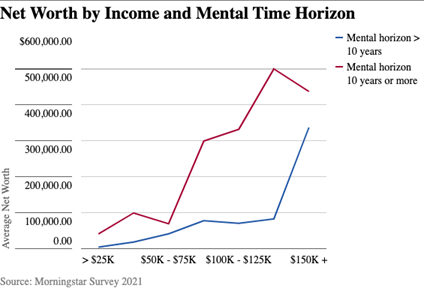
In our study we found that in every income group, people who think at least 10 years ahead had saved significantly more than peers who had a shorter mental time horizon.
We saw a generally positive relationship between income and net worth, but in every income group, the average reported net worth was significantly higher among those with longer mental time horizons than those who reported thinking less than 10 years ahead.
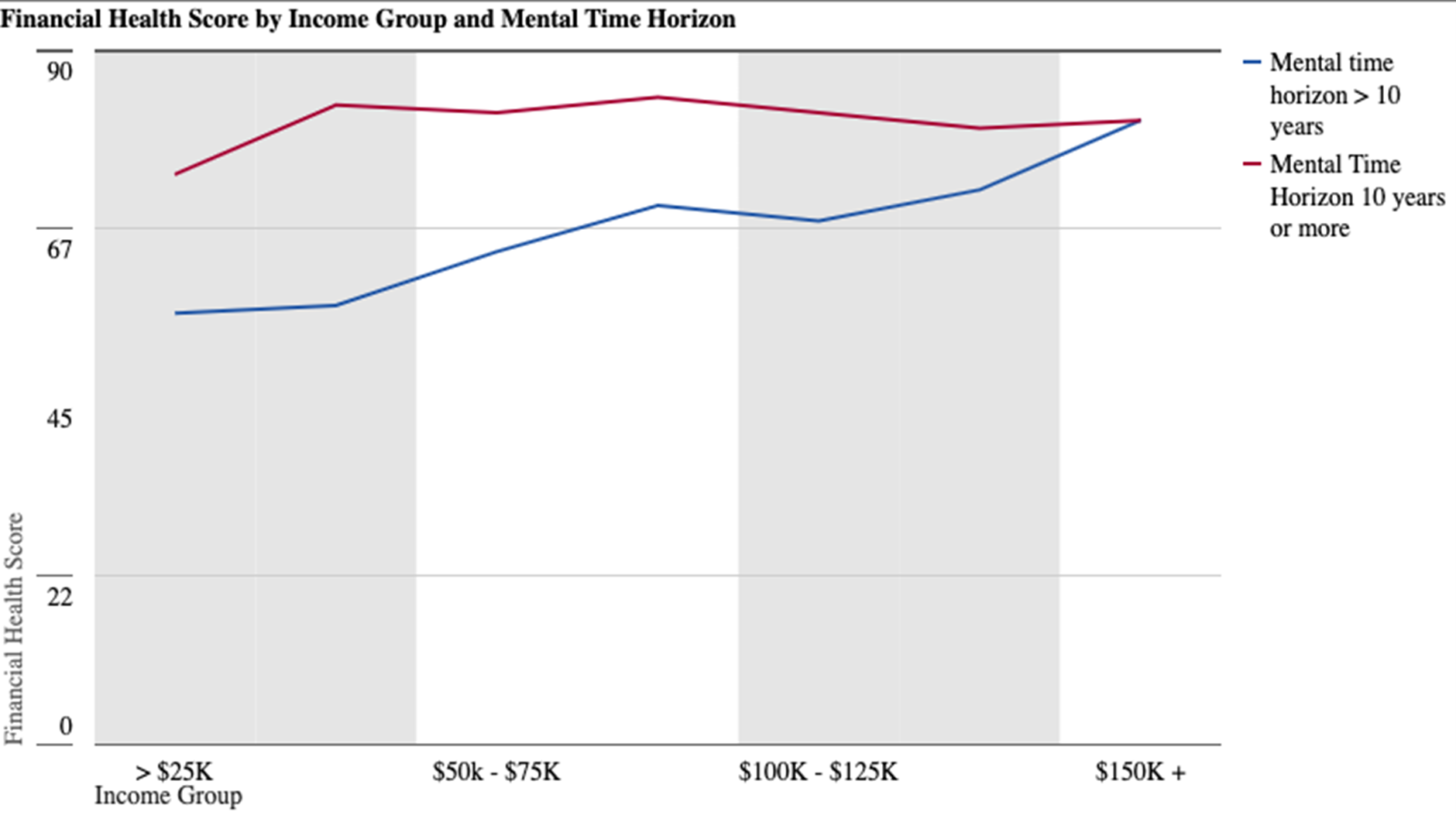
The study also asked participants to complete a financial health survey created and validated by the Financial Health Network. (See the full FHN survey and methodology here.) In every income group, people who said they think at least 10 years ahead had significantly higher financial health scores than their peers with shorter mental time horizons. Linear regression showed that answers to this one question explained 27% of the variation in financial health scores (for comparison, income accounted for only 8% of the variance in financial health scores).
The Relationship Is Likely Bidirectional
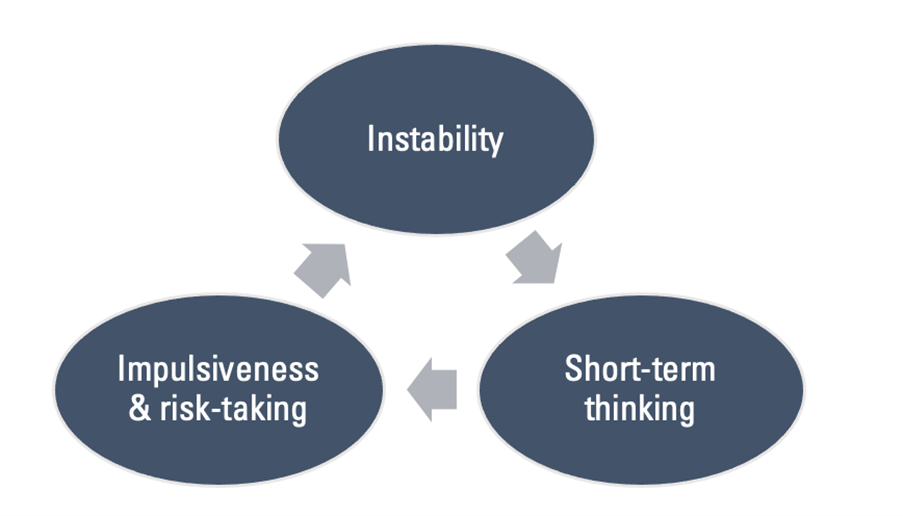
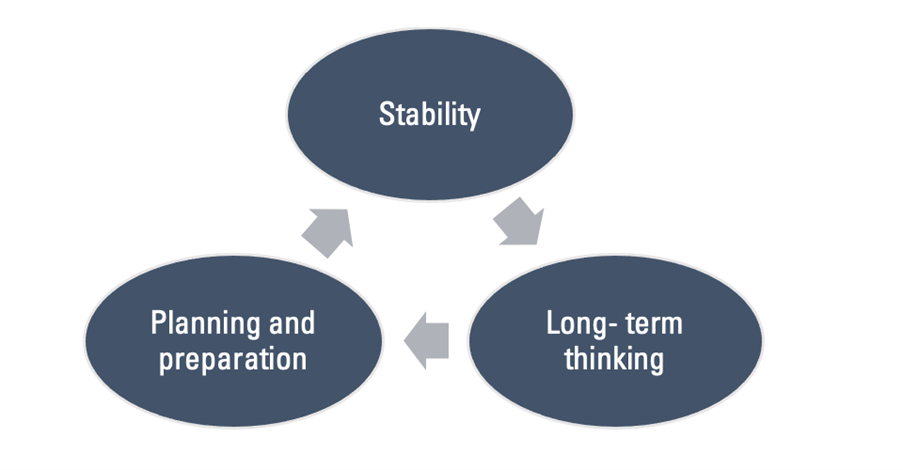
Which comes first: a high net worth or thinking about the future? It could be either one. For example, someone with more debt than assets may also have a high degree of instability in their life, financial or otherwise. Instability makes it hard to look into the future because there is so much uncertainty. It’s very difficult to plan for 10 years out when you don’t know what will happen next week or next month.
Unfortunately, short-term thinking can set us up for a poverty trap. Psychologists have found that short-term thinking is generally associated with more-impulsive, risk-taking behavior, and so those with a limited mental time horizon may make choices that exacerbate their financial insecurity, creating a negative feedback loop.
If a person has a modicum of stability (aka savings or other resources to fall back on), it becomes easier to look further ahead. Future thinking allows promotes long-term oriented decisions, which in turn create more stability, creating a positive feedback loop.
What Can You Do About It?
The relationship between mental time horizon and financial health is good news because it suggests we can change our financial habits by changing our mental habits. We can start anywhere in the cycles shown above and create either positive or negative change, but since the easiest place to start is with our thoughts, that is where I will focus.
It’s much easier to change a mental habit than to change one’s income, education, age, or other factors we typically associate with financial health. By training ourselves into a longer mental time horizon, we may be motivated internally to save and invest more as our mindset changes. So, how do you train this mental habit?
One step at a time.If you currently think in terms of weeks, it’s not realistic to suddenly plan for generations. You might want to imagine how your kids and grandkids might benefit from your good money management as motivation, but in the day-to-day, it will likely be more practical to focus first on stretching your mental time horizon to months rather than weeks. What would you realistically like your savings account to be next month? Perhaps imagine a three- or six-month stretch goal, and set a calendar reminder to regroup or check in on the goal every week or so. When the reminder comes, even if you have not made progress, practice picturing the path to the goal again. Training a new mindset is like training physical habits. It takes reminders and repetition before it becomes automatic.
Fill the picture with details.If you’re a short-term thinker, you likely have only a vague idea of your future. Filling in your fuzzy mental imagery with vivid and specific details can help solidify the vision into something that feels more tangible and realistic. That can give the imagination something to anchor itself on. For example, if you’re in your twenties and you want to build great saving habits, retirement may be too far off to seem real. Setting a goal to reach your first $50,000 in five years might be more motivating. A goal like this extends your mental time horizon past what you are used to and anchors on a specific, achievable goal that you can picture with clarity. It’s true that life has its own ideas, and any plan you make will likely need to be revised, but don’t use this as an excuse for not planning. A plan that changes is better than no plan at all.
Build up to the big picture.Once you’ve had some practice pushing the limits of your mental time horizon, you can work on extending your thinking to decades and even generations. What would you like your net worth and lifestyle to look like in 10 years? 20? 50? How can you imagine your decisions making a positive impact on the next generation? What people or organizations would you most like to support, and how might you use your resources today to help them thrive tomorrow?
Over time, as you practice filling your mental picture with details, you will be building a habit of long-term thinking. As it slowly becomes a habit of mind, you may naturally become more inclined to save, invest, and plan for your future. Eventually, you’ll be thinking in terms of decades and generations, just like a financial professional. With that mindset, long-term plans are much easier to accept and put into action.
Receive investment insights straight to your inbox:
By clicking subscribe, you agree to receiving editorial, events, product update and marketing emails from Morningstar and its related parties, until such time that you choose to unsubscribe or update your preferences via the link in the footer of our emails. You also agree to the Morningstar’s Terms, Privacy Policy and Financial Services Guide (AU).